Classic Korean Bibimbap
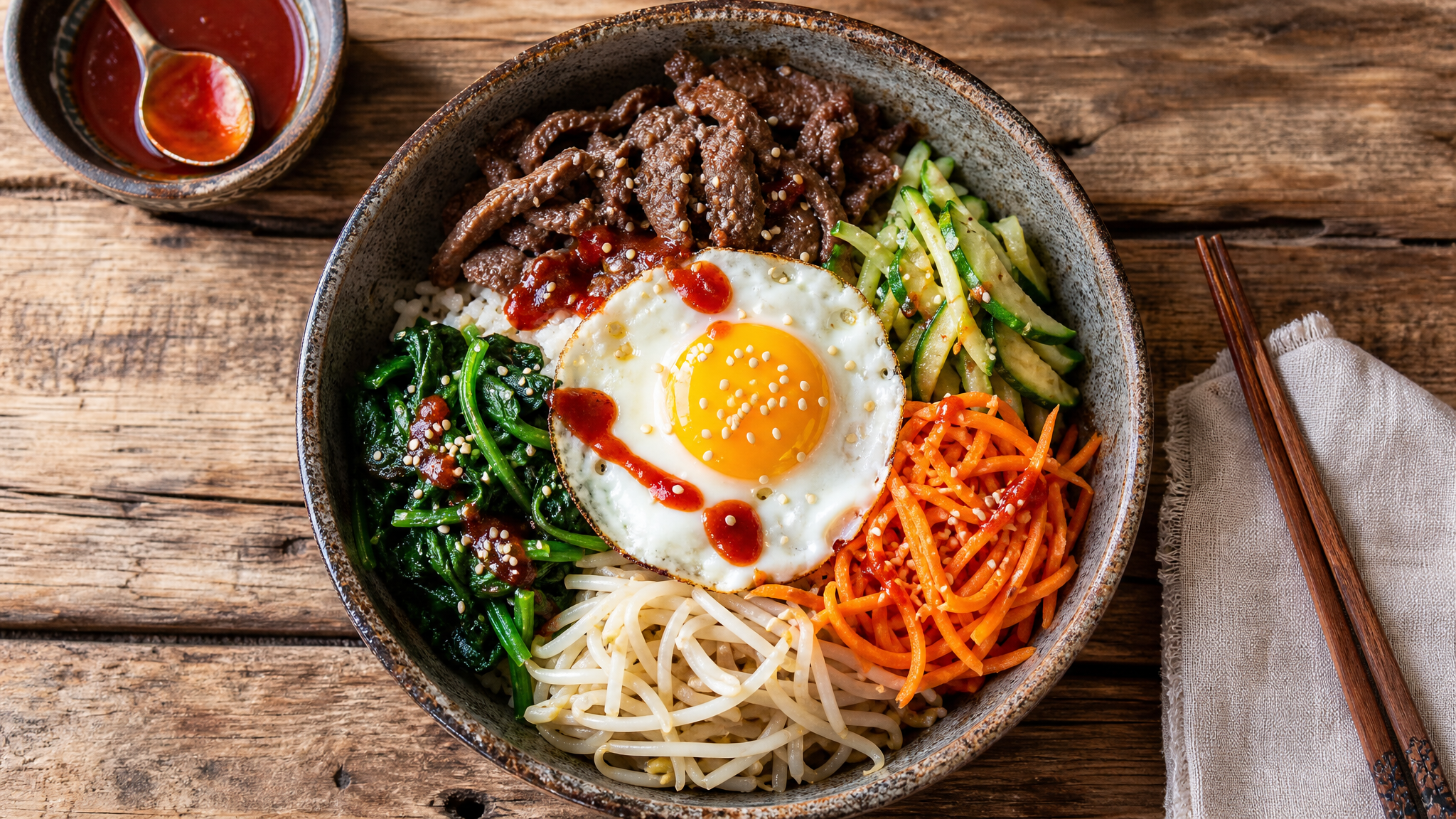
Bibimbap is a vibrant Korean rice bowl, and this definitive version delivers on flavor. It features perfectly seasoned beef and an array of colorful, individually prepared vegetables, all crowned with a runny-yolk fried egg. The secret is preparing each component separately to build layers of distinct flavor and texture, brought together with a savory-spicy gochujang sauce.
Ingredients
- 4 cups, cooked short-grain white rice
- 8 ounces sirloin or ribeye steak, thinly sliced
- 3 Tbsp + 1 tsp, divided soy sauce
- 1 Tbsp + 1/2 tsp, divided sugar
- 2 Tbsp + 2 tsp toasted sesame oil
- 4-5 cloves garlic, minced
- 1/4 tsp ground black pepper
- 10 ounces fresh spinach
- 12 ounces soybean sprouts
- 1/2 tsp, plus more for seasoning salt
- 2 medium carrots, julienned
- 5 ounces fresh shiitake mushrooms, sliced
- 1-2 Tbsp neutral cooking oil (like canola or vegetable)
- 4 large eggs
- 1/4 cup gochujang (Korean chili paste)
- 1 Tbsp water
- 1 Tbsp rice vinegar
- 1 tsp, plus more for garnish toasted sesame seeds
Steps
- 1
Make the rice according to package instructions, yielding 4 cups cooked.
- 2
In a medium bowl, combine 2 tablespoons of soy sauce, 1 tablespoon of sugar, 1 tablespoon of sesame oil, 2 minced garlic cloves, and black pepper. Add the sliced beef and toss to coat. Set aside to marinate for at least 20 minutes.
- 3
Whisk together the gochujang, water, rice vinegar, 1 tablespoon of sugar, 1 tablespoon of sesame oil, 1 minced garlic clove, and 1 teaspoon of sesame seeds in a small bowl to create the sauce. Set aside.
- 4
Bring a pot of water to a boil. Blanch the spinach for 30-60 seconds until wilted, then transfer it to an ice bath. Squeeze out as much water as possible. In a bowl, toss the spinach with 1 teaspoon of soy sauce, 1 teaspoon of sesame oil, and 1 minced garlic clove.
- 5
Using the same boiling water, blanch the bean sprouts for about 2 minutes until tender-crisp. Drain, rinse under cold water, and gently squeeze to remove excess moisture. Toss the sprouts with 1 teaspoon of sesame oil, 1 minced garlic clove, and 1/2 teaspoon of salt.
- 6
Heat a lightly oiled skillet over medium-high heat. Sauté the julienned carrots with a pinch of salt for 2-3 minutes until tender-crisp; remove from the pan. Add the sliced mushrooms to the hot pan and cook for 3-4 minutes until browned, adding 1 teaspoon of soy sauce and 1/2 teaspoon of sugar during the last minute of cooking; remove from the pan.
- 7
Increase heat to high and add the marinated beef to the skillet in a single layer. Cook for 2-4 minutes, stirring occasionally, until browned and cooked through.
- 8
In a clean nonstick skillet, fry the four eggs sunny-side up, keeping the yolks runny.
- 9
To assemble, portion the warm rice into four bowls. Arrange the cooked beef and all the prepared vegetables in individual sections on top of the rice. Place a fried egg in the center of each bowl.
- 10
Serve immediately with the gochujang sauce on the side. Instruct diners to add sauce to their liking, drizzle with extra sesame oil, and sprinkle with sesame seeds before mixing thoroughly.
Pro tips
- Mise en Place is Crucial: This dish has many components. Prepare all vegetables, the marinade, and the sauce before you begin cooking on the stove.
- Squeeze for Success: Removing all excess water from the blanched spinach and bean sprouts is critical to prevent a watery bibimbap bowl and to ensure the seasonings adhere properly.
- Cook Separately: To ensure every component is perfectly cooked and its flavor remains distinct, cook each vegetable individually. A quick wipe of the pan between items will suffice.
- Runny Yolk Richness: Don't overcook the egg. The liquid yolk acts as a creamy, enriching sauce that brings the whole bowl together when mixed.
- Use Short-Grain Rice: For the authentic sticky and slightly sweet texture that forms the perfect base for bibimbap, use Korean or Japanese short-grain rice.
- Sear the Beef: Use a hot pan to cook the beef quickly. This creates a flavorful sear without making the meat tough.